A LEGACY IN PROGRESS: HOW LANEAH BRYAN IS BUILDING THE FUTURE OF FLAG FOOTBALL
March 3, 2026
Q&A: Julian Kalel, El Paso’s American Idol, Reflecting on His Journey so Far
March 9, 2026
Opening the Dental Chair to Everyone: How Smiles for All Is Closing the Care Gap
Story and photography by: Al Garcia
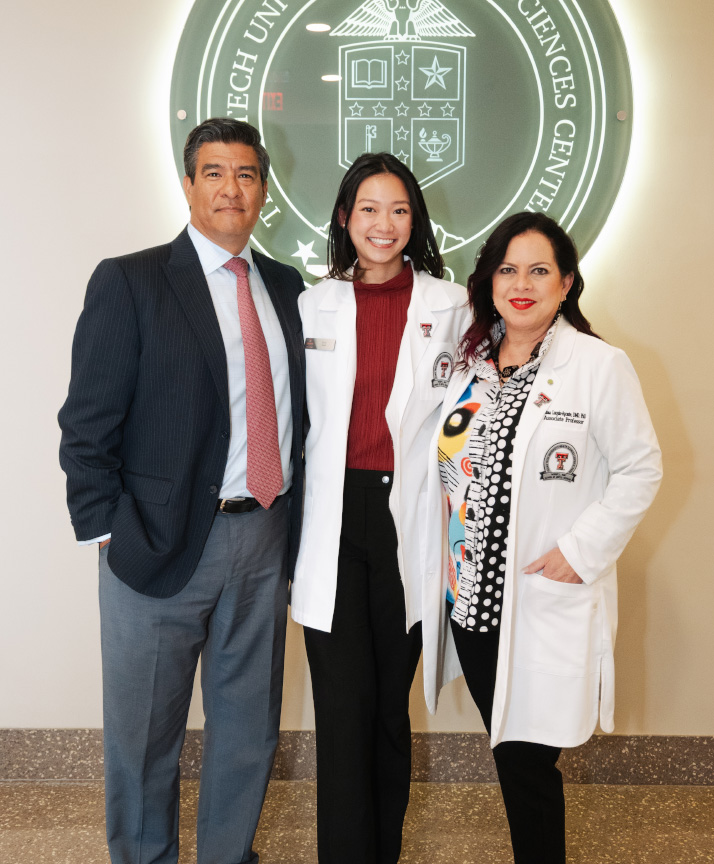
Smiles for All, created by Kelly Yang, is expanding access to dental care in El Paso by offering specialized, sensory-friendly treatment for patients with special needs. Yang and colleague Dr. Wilma Luquis-Aponte share how the program is removing barriers to care, joined by Bank of America’s Ruben Torres, whose support has helped the initiative grow.
Can you share a story of a patient who previously had no access to dental care and what changed for them through Smiles for All?
Yang: One of the patients that we had, his first appointment – he wouldn’t even enter the room. Following a few more appointments, we were actually able to get him in the chair, and he was very curious about the dental equipment. We were actually able to get some x-rays on him. Being able to see the transition from not even wanting to step near the room to now being able to sit in the chair and for us to be able to do a whole exam on him, I think that was really rewarding.
Before Smiles for All existed, what options did special-needs patients in El Paso realistically have, and what barriers prevented them from receiving care?
Luquis-Aponte: I think one of the biggest barriers here in El Paso is access to care due to the lack of trained professionals that are willing to accept patients into their offices and accept the reimbursement that comes from commercial insurances or state insurance. It’s very hard to provide services when you’re expecting some reimbursement, but when that doesn’t happen, it takes away part of that incentive for the dental provider to expend twice the time and effort into the patient with autism, Down syndrome, or any other special needs that they have. It’s not easy for the dental provider, especially if they’re not trained. Training for special needs is not a given in most dental schools. When the students graduate, they don’t have that training; it’s very difficult for them to sit down in a chair and try to get that patient to receive the services that they need. That is very common here in El Paso and West Texas.
Your program focuses on helping patients receive care without relying on sedation. Why is that such a significant shift in how dentistry can serve special-needs populations?
Yang: I think everywhere, every patient deserves a provider that’s going to meet them where they are. And why that’s more important in the realm of special needs is because people with special healthcare needs will come in, and a lot of times, the providers won’t be able to manage and then they move on to sedation because it’s easier and they can get everything done altogether – but that just makes whoever is receiving care more scared of the dental office. Every time you go to the dental office, you know you’re going to go to sleep and you’re going to get work done. You’re going to wake up, you’re going to be numb. To be able to go back and start from the basics while they’re still young, and be able to let them know that the dentist is not scary; it’s fun. To provide that background, there is a good foundation of going to the dental office for it to not be scary.
El Paso faces a shortage of dental professionals—how critical is this program to improve healthcare access and outcomes in our region?
Luquis-Aponte: The main goal of the program was to expose not just the patients to our most friendly dental environment, but to actually get the students to provide that environment, and learn about how they can make that happen after they graduate. They feel a little bit more at ease trying to serve the patients, and they’re a little bit more prepared than somebody that has not been exposed to a program like this.
What role has Texas Tech University Health Sciences Center El Paso played in building and supporting this program, and how does it reflect the institution’s broader mission to serve underserved communities?
Luquis-Aponte: I think one of the most important things is that our administration, our teams, are very supportive of the program. They allow the facilities to be utilized when we need them and they’re not putting barriers for us to have the patients, their parents, their caregivers, and the students available. It goes hand in hand with the mission and the vision of the institution, which is access to care and serve our community – the community of El Paso.
Luquis-Aponte: Having a program, having students exposed to a program like this, it gives them an idea of that environment out there that they can implement themselves in their offices once they graduate. That definitely closes the gap of patients that fall through the cracks. One of the biggest problems is that we have pediatric dentists, and they serve the community of the pediatric population, but once that pediatric patient reaches their teenage or young adult years: that’s it. The pediatric dentists usually don’t see them anymore. There’s very few of them who are willing to still serve that population, for the most part, they need to graduate to a general dentist. If the general dentist is not equipped or trained, then that patient will fall through the cracks.
Yang: Also, as a school, because we have all the different specialties at the school, we’re able to fill that gap of patients needing to go to a specialist and their general dentist and then be referred back. We’re able to fill that gap of patients that have trouble with transportation, even with financial instability. Being able to have a school that is multidisciplinary, and being able to work with so many different faculties and so many different specialties in one area fills the gap of El Paso in general.
Bank of America’s investment helped expand the program. How important are partnerships like this in making specialized care accessible, and what does it say about the role of community leadership in healthcare?
Torres: We’re a firm believer of serving very distinct pillars. Obviously, we serve our clients, or whether they’re corporate or individual, like you and I, we also serve our employees. We all, more importantly, serve the communities that we live in. I’m born, raised, educated and live here in El Paso Texas. We’re a part of the fabric of the community. Being part of the community means you want it to be healthy and thriving. In this case, as Kelly alluded to earlier, we want the patient to be comfortable and have this become a normal routine. When you start having patients not seeing a physician, what happens is it progressively gets worse. When it gets progressively worse, it also means it gets progressively expensive. This program takes the stigma out of being able to bring in a patient with special needs and without having to go through sedation in the center that we’ve sponsored. What we’re trying to do as a bank is to prevent the financial aspect of it from impacting that patient’s life. If we can help financially as a corporate citizen in this market, if we can help the El Paso patients, Texas Tech as an organization serve this very unique need, then we’re happy to do so.
Luquis-Aponte: Bank of America has given us a grant and facilitated for this clinic to have its own wheelchair lift. That is a big thing here because one of the barriers that some of these patients face is if they’re wheelchair bound, it’s really hard to get them into any dental facility. The wheelchair needs space, and then if we have managed to get the patient in, now we have to transfer them to the dental chair – and that is a risk that we are trying to avoid. By now having this wheelchair lift, we have opened the doors for many patients who were turned away because there was no way to get them in a dental chair. Having that wheelchair lift has been a blessing for our community.
Torres: We’re happy to help, as I mentioned earlier. I’m glad that the wheelchair lift is getting used every single day. If our students see that equipment, they’re not going to be saying, “Oh, I don’t know how to operate that. I’m not going to deal with this right now,” – no, we are teaching them how to maintain the lift and keep it in pristine condition for every patient that goes through that door.
Looking ahead, what is your vision for the future of Smiles for All, and what lasting impact do you hope it will have on El Paso and beyond?
Yang: I hope this program is sustainable. As an institution, we’ve laid out the foundation of it, and I know the next leader of the program will keep building on it. I would like to see this keep going and to be able to serve more patients and more people in El Paso, making a bigger impact as years go on.