


Collected Living: A Home Where Every Detail Tells a Story
May 11, 2026
Joe Gomez: Preserving Our Community’s Legacy
By Michael C. Graham
Photography by: Robert Corral
Originally published March 2015
The pioneering anthropologist Margaret Mead once stated in her discussions on human development and history, society should “Never doubt that a small group of thoughtful, committed people can change the world. Indeed, it is the only thing that ever has.” This axiom has proven true time and time again throughout our history. It is seen in the work of community leaders, of coaches, and of teachers. It is also, on rare occasion, seen through the lens of a dramatic and significant event; a singular achievement whose impact is broad and everlasting.
Not so long ago, our community was the epicenter for such an event, and it is largely though the efforts of one man that we are able to remember and preserve its legacy for generations to come.
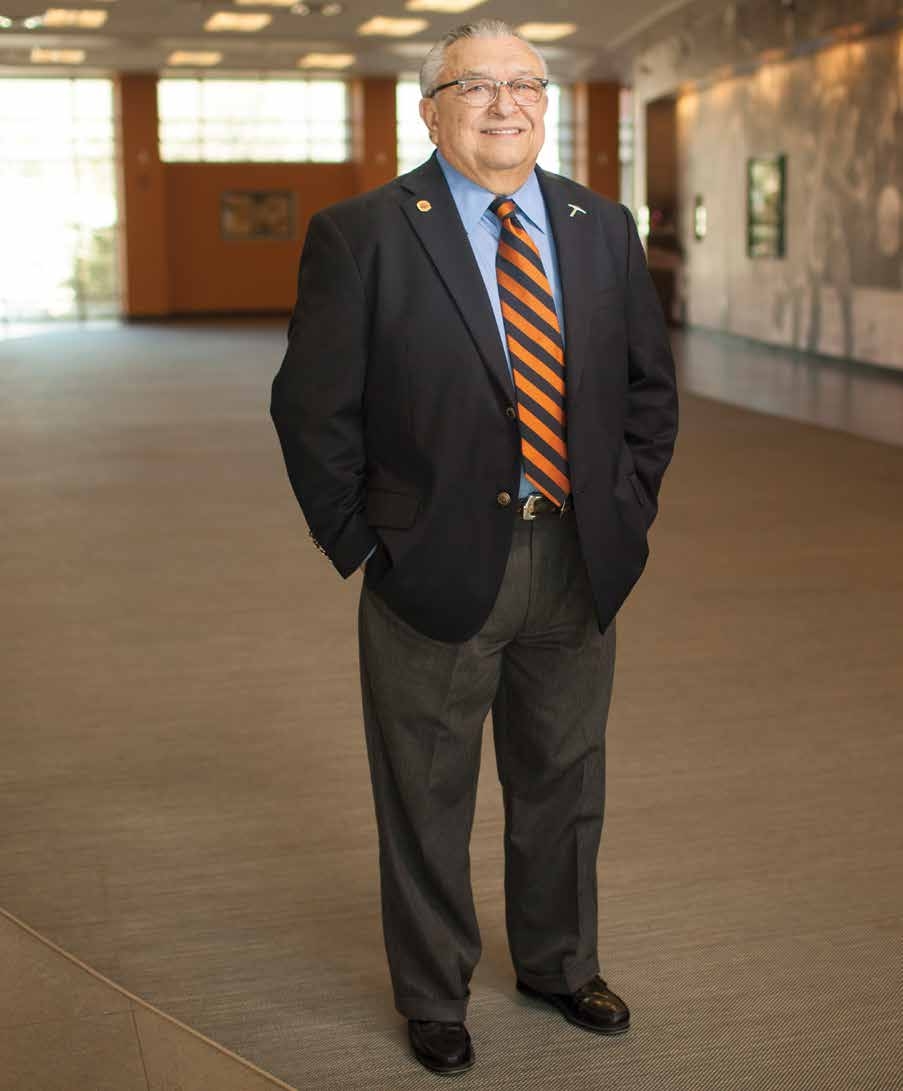
Like many El Pasoans, Joe Gomez came to the Sun City as a result of his father, Pedro, being transferred to Fort Bliss. The family would later be transferred to Germany, and then again back to El Paso where Joe finished high school. He graduated from Burgess in 1965 and enrolled at Texas Western College that fall. Encouraged to pursue his passions, he chose to major in history with a minor in physical education. He would have the opportunity to pursue his passion for significant events and of the preservation of history.
Looking back, it is relatively easy for us to understand the cultural significance of the 1960s, but it is much more difficult to appreciate the significance of events while they are occurring. It is also considerably more difficult to appreciate the scope and reach of events, but luckily for our community and for a special group of athletes and their coaches, Joe was able to do just that. However, in order to fully understand and appreciate the impact that Coach Haskins’ and the 1966 team had on the sports world, and on society at large, through their victory over Kentucky in the 1966 NCAA Basketball Championship game, we must take a moment to recall the movements that were occurring all across the country.
In 1954, the Supreme Court, in what is largely recognized as one of the truly landmark decisions of The Court, officially declared that the prevailing policy of “separate but equal” was unconstitutional. Throughout the south, a total of 17 states had at least one law creating institutionalized separation, a policy that prevailed and thrived in early 20th century America, largely through a set of laws know as the Jim Crow laws. In short, and to put it bluntly, these laws allowed the southern states and communities to continue a policy of treating black Americans, and other races as well, as inferior. These laws prevented blacks from having access to public facilities and education. In short, the laws were designed to segregate black Americans from the white majority population.
The injustice and cruelty of those policies, and often the brutality of the enforcement of those laws, was becoming evident to the world during this period, and the Civil Rights Movement was gathering momentum and significance across the entire nation. Throughout the country, schools and universities became the focal point of the battle between the past and the future; between prejudice and opportunity. Governor George Wallace became the rallying cry for those seeking to prevent change when he famously remarked in his inaugural address in January of 1963, “segregation now, segregation tomorrow, and segregation forever.” In 1964 the Civil Rights Act was passed, banning discrimination on the basis of “race, color, religion, sex or national origin” in employment practices and access to public accommodations. And in 1965, the Voting Rights Act was passed, officially eliminating the poll taxes and other subjective voter tests that were enacted to prevent minorities from being able to vote. So, as Coach Don Haskins, beginning his fifth year as head coach of the Texas Western College basketball team, and his team from El Paso began their season, the world around the team was changing in large and powerful ways.
When I sat down and talked with Joe about what it was like on campus, as in so many other areas of the country, sports was providing a respite from the turmoil and providing a showcase that demonstrated that whites and blacks could not only coexist, but could be successful together. As he told me, “Memorial Gym simply became a place where anyone and everyone could go, and where everyone did go, regardless of what they looked like.” As the season progressed, the games grew even more popular and the community even more involved.
The 1966 team finished the regular season in early March 1965 with a record of 23-1, and a ranking of #3 in the Associated Press poll. Joe was in the spring of his freshman year, and he was well into what would become a lifelong friendship with the Miners talented floor captain point guard Bobby Joe Hill. When I asked Joe what motivated him to expend such effort and energy towards preserving the team’s legacy, and towards recognizing the significance of their achievement, he simply stated, “Bobby Joe made the difference.”
As most of you reading this know, the 1966 team went on to win the championship game over Adolph Rupp’s favored Kentucky team that included future coach Pat Riley and was playing for what would be their fifth NCAA national championship. The game was played at Cole Field House at the University of Maryland, a scant 12 miles from the White House. Rupp was like the rest of the coaches in the Southeastern Conference in that he neither recruited nor played black players. Coach Haskins’ starting five were all black players marking the first time in NCAA history. The sports world took notice; other schools and leagues took notice; and the rest, as they say, is history. However, our ability to enjoy and understand those events, and their significance, is truly the result of Joe’s dedication and hard work towards preserving the team’s legacy, and for ensuring that they were properly recognized, even if that recognition took years to come.
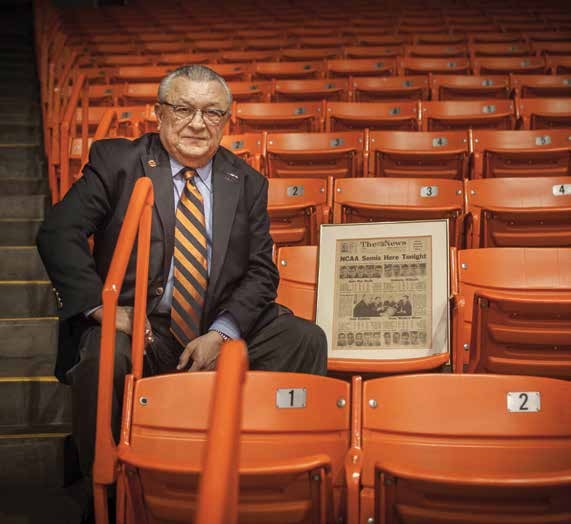
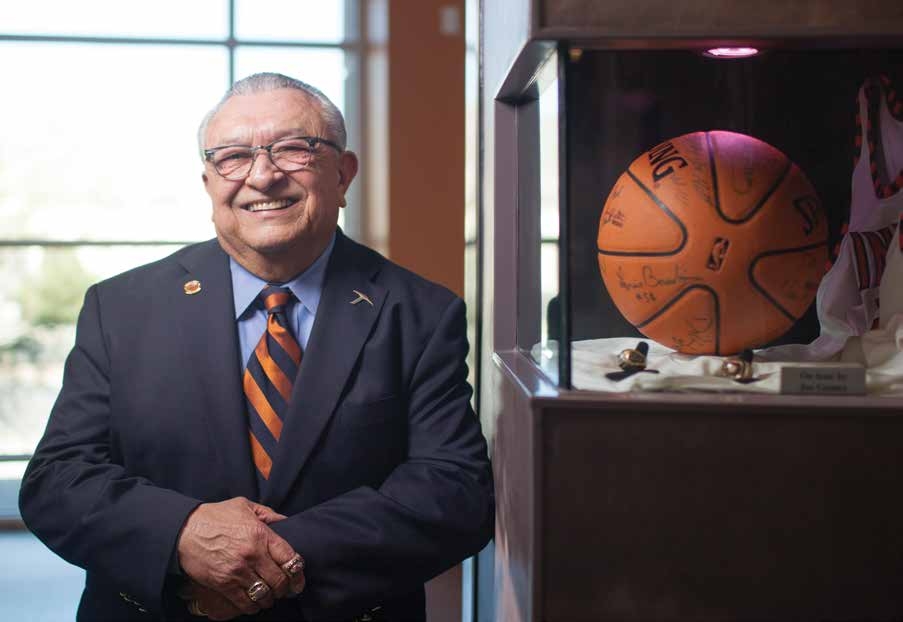
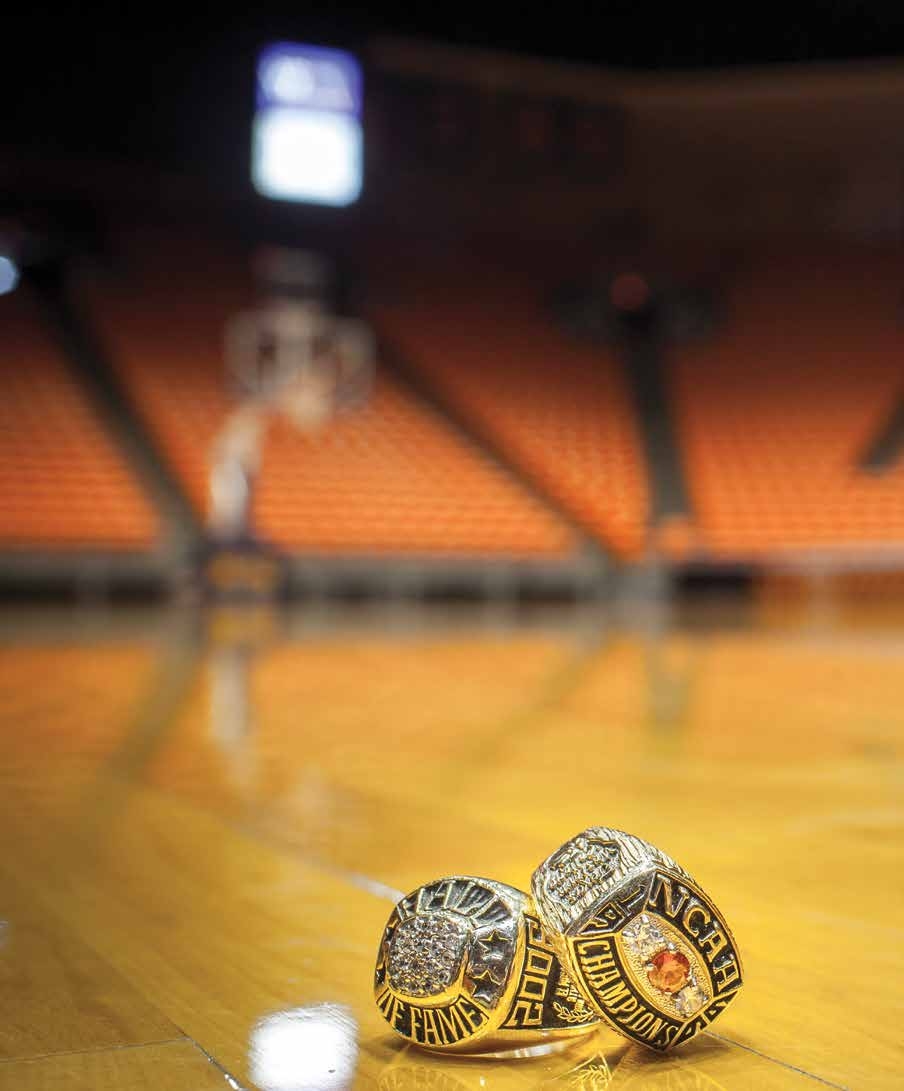
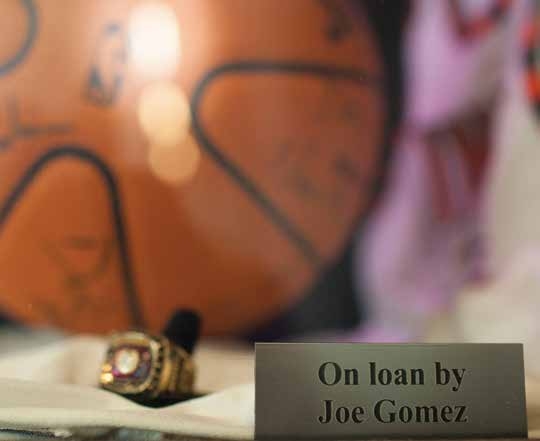
In the 1960s, national championships were not celebrated the way they are today, and in truth there was very little fanfare or media attention in general, let alone when the winner was a tiny school in El Paso, Texas. As Joe remarked, “It was simply sad the way the team had virtually nothing to show for their accomplishments.” So, along with continuing what was by then already a significant quest towards preserving the history of the moment, Joe also helped begin movements to provide recognition for the individuals involved. He was instrumental in having championship rings made for the team, which was not the normal practice in 1966. He almost singlehandedly began the drive for the 20th anniversary celebration. To do so he worked with a loose coalition of community and business leaders, including Henry Silverman who was instrumental in providing the rings, and the staff at KVIA Channel 7, who helped transfer the original game footage from 16mm to VHS tape. The 20th anniversary celebration included a ceremony recognizing the team before the final home game of the 1986 season that was scheduled for roughly five minutes, but ended up lasting almost 40.
From that point forward, much of the renewed interest came as a result of the success of Coach Haskins’ autobiography, Glory Road, and the subsequent Disney movie based on the book. The team’s story was now being told again, and there was an even larger stage on which to tell it. And again, Joe’s pursuits proved invaluable in providing information and context for the story. Joe was there to chronicle the journey yet again, including the team’s visit with President Bush, and the events surrounding the film’s release. In 2007, the team received what was probably its highest honor: when it was enshrined in the Naismith Memorial Basketball Hall of Fame, becoming the first team to be so honored.
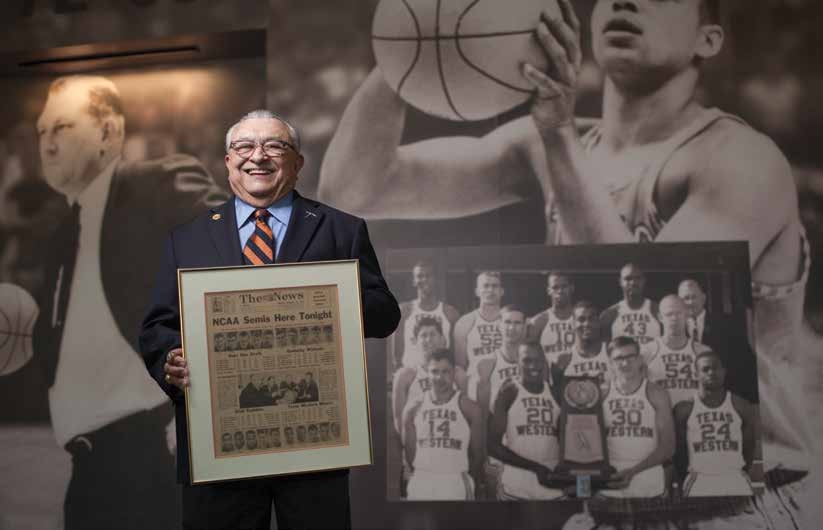
Today Joe continues to serve our community through his work as the Director of Business Development for Jordan Foster construction, and continues to help tell the team’s story and preserve its legacy. His efforts over these past 40 plus years to preserve the legacy have resulted in his receipt of the Gold Nugget award from UTEP; being inducted into the El Paso Athletic Hall of Fame; receiving the Star on the Mountain award and being named the Sun Bowl Association’s Most Valuable Volunteer. Joe served on the UTEP Civil Engineering Advisory Board and has been chairman of the UTEP Heritage Commission. However, despite his personal accolades, the focus remains on highlighting the achievements of those young men four decades ago. “The recognition that has come to all of them has been really wonderful.” Joe continued to echo one consistent message: the importance of remembering and preserving what the 1966 team accomplished. Coach Haskins and the team often focused on the basketball element of the win; indeed that team remains the only team from Texas to win the National Championship. However, many others saw much more in the accomplishment, and rightfully so. It is na.ve and shortsighted to think that one game can turn the tide of an entire society’s ignorant ways, but the significance of the game cannot be minimized. In fact, one need only look at the rosters of Kentucky’s own Southeastern Conference for evidence of that. A short ten years after the 1966 game, half of the basketball players in the SEC were black.
Margaret Mead may have focused her quote on a small number of persons, but there is no mistaking the power of a focused and dedicated individual. Through Joe’s efforts, he has ensured that we will continue to be able to enjoy and learn from the 1966 season, from Coach Haskins, and from the team itself for generations to come. That is a powerful and lasting contribution to any community and all El Pasoans should be grateful that we are blessed with someone with such passion for helping preserve this important story.
So, thank you Joe. And Go Miners!
